The premium tier
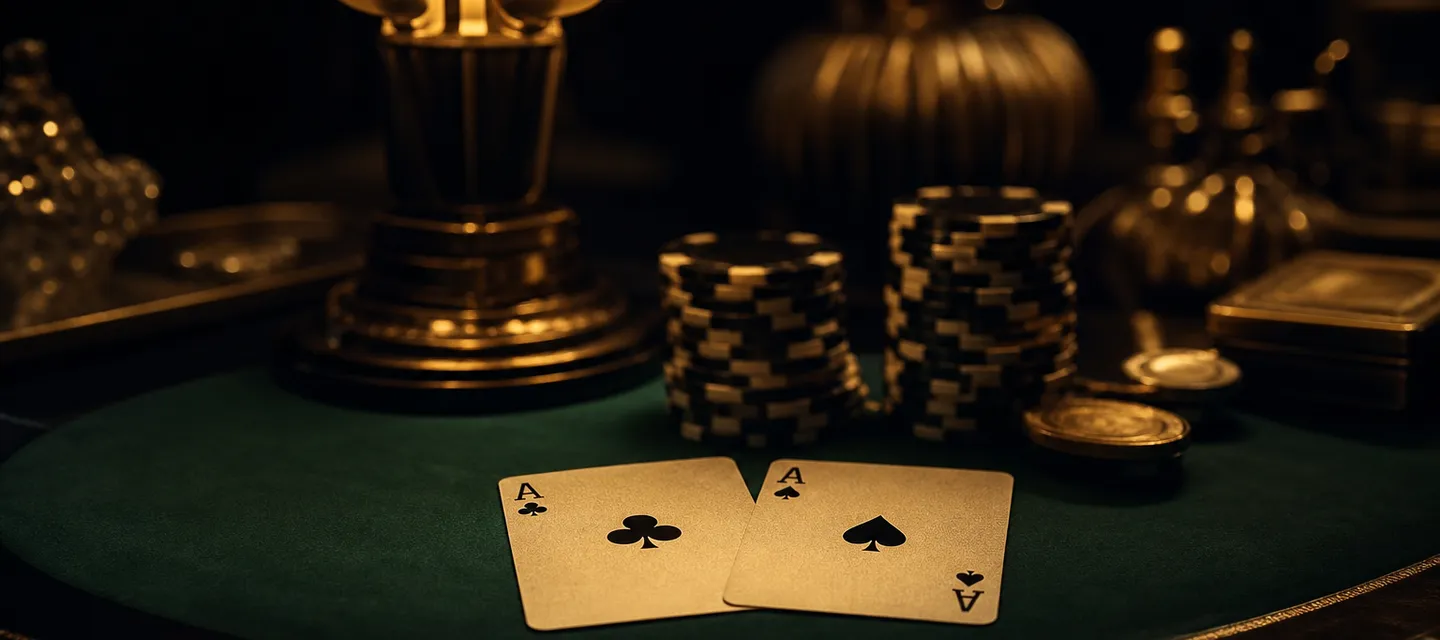
Four hands sit above everything else: pocket aces, pocket kings, pocket queens, and ace-king. Raise them from any seat, reraise them when someone else opens, and stop looking for reasons to be clever. Cleverness with aces is how aces lose.
Now the frequencies, because they change how the tier feels. Any pocket pair arrives once every 17 hands. Aces specifically arrive once every 221. The whole premium tier combined shows up about once every 39 deals, which at a live table is roughly once an hour. Most of your session happens without a premium hand, and that is the first honest fact of preflop poker: the default action is folding.
The frequencies also explain a common beginner disaster. Because aces are rare, people treat them as precious and slowplay to "protect" them. Backwards. Aces win about 85 percent against one random hand, and that edge is largest before the flop. Letting four opponents in cheap converts a monster into a coin-flip lottery. Raise, thin the field, and let the math you paid 221 hands for actually work.
Ace-king earns one footnote of its own. It is the only unpaired hand in the tier, which means it usually needs to improve: against a pair like queens it is close to a coin flip, a touch behind. Play it hard preflop anyway. The hands that give you action are often the very ones it dominates, ace-queen and worse, and winning the pot before the flop is a perfectly good result too.
The playable middle
Below the premium four lives a wide band of hands that are profitable sometimes: medium pairs like nines through jacks, suited broadways like KQ and QJ suited, ace-queen, and suited connectors like 87 suited. The single most important word in that sentence is "sometimes," and the thing that decides it is your seat.
Take a middling pair. Sixes flop a set about one time in 8.5. The other seven and a half times you hold one small pair on a board that keeps getting scarier. Whether that gamble pays depends on how cheaply you see the flop and how big the pot gets when you connect, and both of those are position questions. Acting last, you control the price. Acting first, you pay whatever the table decides.
Suited connectors are the clearest case. An 87 suited flops a flush well under 1 percent of the time and a flush draw about 11 percent, plus straight draws at a similar clip. So the hand usually arrives as a project rather than a made hand. Projects need cheap materials and a big payday, which means late position, multiple callers, and deep stacks. The same cards under the gun face raises behind, awkward streets out of position, and a payday that never quite covers the tolls. Identical hand, opposite verdict. The position guide covers why in full.
Suitedness itself is worth less than it looks, by the way. Matching suits add roughly 2 to 3 percent of equity over the offsuit version. Real, worth having, and nowhere near enough to rescue a bad hand.
The trash that looks pretty
Two hand families take more beginner money than any others, and both photograph well.
First, offsuit aces with a weak kicker: A7 offsuit, A4 offsuit, and their cousins. The ace wins the staring contest preflop and loses the arithmetic after. When you pair your ace and get action, the bettor usually holds an ace with a better second card, and now you are "dominated": drawing at three outs. These hands win small pots and lose big ones, which is the exact profile you want in your opponents and never in yourself.
Second, low suited cards like J4 suited or 62 suited. The matching colours whisper about flushes, and the whisper is a lie you can price: flop odds under 1 percent, and even the made flush is a low one that can lose to a bigger flush for stacks. If you would fold the offsuit version, fold the suited version. That one rule quietly deletes a whole category of leak.
The tier table
Here is the deck sorted into five tiers, with a default action by seat. It is deliberately tight. You can loosen later, once folding is a habit instead of a struggle.
| Tier | Hands | Early position | Late position |
|---|---|---|---|
| Premium | AA, KK, QQ, AK | Raise | Raise |
| Strong | JJ, TT, AQ, AJs, KQs, ATs, KJs, QJs | Raise | Raise |
| Speculative | 22-99, suited connectors, A2s-A9s, KTs, QTs | Fold (pairs may call cheap) | Raise or call cheap |
| Marginal | KJo, QTo, A9o-A6o, K9s, and the other late-seat steals in the chart below | Fold | Raise if folded to you |
| Trash | Everything else | Fold | Fold |
Two reading notes. "Raise if folded to you" in the marginal row is the steal: when everyone before you has folded, even a mediocre hand plays fine against two random hands in the blinds. And the speculative row is the one that swings hardest by seat, for the project-hand reasons above.
Poker starting hands chart by seat
The tiers tell you what a hand is. The chart below tells you what to do with it from a given chair when nobody has entered the pot yet. Pick a table size and a seat, and every one of the 169 hands shows as an open or a fold. Tap or click any square for its combinations, its tier from the table above and a one-line note. With a keyboard, tab into the grid and move with the arrow keys.
6-max, UTG: opens 11.6% of hands (154 of 1,326 combinations)
- Raise, and reraise if someone opens first
- Open-raise
- Fold
AA Pocket Rockets
Pair - 6 combinations - Premium tier
6-max, UTG: raise and reraise. Opens from every seat.
The best hand before the flop, about 85% against one random hand. Raise, and reraise when someone opens first.
How to read the grid
Pairs run down the diagonal from aces in the top left to deuces in the bottom right. Everything above the diagonal is suited, everything below is offsuit, and the high card always comes first: the square to the right of AA is AKs, the one beneath it is AKo. Each pair square stands for 6 combinations, each suited square for 4 and each offsuit square for 12. That is why the offsuit half of the grid carries most of the weight when you count how often a seat plays: 78 pairs, 312 suited combinations and 936 offsuit ones make up the 1,326.
The percentages come straight from those counts. Add up the combinations of every shaded square, divide by 1,326, and you get the share of all deals that seat opens.
| Seat | 6-max | Full ring |
|---|---|---|
| UTG | 11.6% | 7.5% |
| MP | 16.0% | 11.6% |
| CO | 25.0% | 18.9% |
| BTN | 46.0% | 40.0% |
| SB | 33.6% | 27.6% |
What the baseline is, and what it is not
These are standard, conservative raise-first-in ranges: the hands to open when the pot is unopened and stacks are around 100 big blinds. They are a starting baseline for someone building a preflop habit, not a solver output and not the loosest profitable strategy. Strong regulars open wider, especially from the cutoff and button, and adjust to the players behind them. If you are new, loosening this chart is a decision to make after a few thousand hands, not before.
A few design choices are worth knowing. The ranges are nested, so every hand that opens under the gun also opens from every later seat; the detail card tells you the earliest seat for each hand. The small blind is tighter than the button, because it plays the rest of the hand out of position against the big blind. At full ring, "UTG" covers the first two or three seats and "MP" the middle ones before the cutoff; at 6-max, UTG is the first seat to act (sometimes called the lojack) and MP is the hijack.
You will also notice the chart opens more than the tier table's early-position column. That is deliberate. The tier table is the tight version for players still learning to fold; the chart is the fuller baseline, so it opens the top of the speculative band, such as 77 or A5s, from early seats at 6-max. Neither covers what to do when someone has already raised; facing a raise, play tighter than the chart, and reraise with the premium squares.
One thing the grid will not do is follow you into a short stack. Below about 15 big blinds in a tournament, open-raising and folding to a reshove bleeds chips, and the right tool is a shove chart instead. That lives on the push/fold chart page.
Poker hand nicknames
Half of poker's vocabulary is slang, and you will hear these at any card room from Las Vegas to the Hippodrome in London. Only the names in wide use are listed here; there are dozens of regional ones.
| Hand | Nickname | Why |
|---|---|---|
| AA | Pocket Rockets | Two aces standing up like rockets on a pad; also "bullets". |
| KK | Cowboys | The kings. Second best before the flop, about 82% against a random hand. |
| Ladies | Two queens. Premium, and the pair that meets an overcard most often of the top three. | |
| JJ | Fishhooks | The J is shaped like a hook; "hooks" for short. |
| 88 | Snowmen | Each 8 looks like a snowman. |
| 55 | Speed limit | The old 55 mph limit on US highways. |
| 44 | Sailboats | The 4 looks like a sail. |
| 22 | Ducks | Each 2 looks like a duck on the water. |
| AK | Big Slick | The best unpaired hand, and the one that most often needs help. |
| AJ | Blackjack | An ace and a jack make 21 at the blackjack table. |
| KQ suited | Royal marriage | King and queen of one suit. |
| K9 | Canine | Say it out loud: K-9. |
| J5 | Motown | The Jackson 5, of Motown fame. |
| T2 | Doyle Brunson | Brunson won the WSOP Main Event in 1976 and in 1977 with ten-deuce as his final hand. |
| 72 offsuit | The hammer | The traditional worst hand in hold'em, and the name players give it when they bluff with it for fun. |
The worst hand deserves a word, since players argue about it. Seven-deuce offsuit is the traditional pick because its cards cannot make a straight together and neither makes a useful kicker. By one measure it is not the weakest: against a single random hand, 32 offsuit wins about 32 percent and 72o about 35 percent. The argument changes nothing at the table. Both are folds from every seat in the chart.
How to drill it
Charts fade; reps stick. The fastest way to burn these tiers in is all-in or fold, a free drill that deals you a hand and a seat and demands one answer: worth a stack, or muck? A hundred decisions takes ten minutes and no chips. If the hand rankings themselves still slow you down, run through the hand trainer first. Then take the tiers to the free hold'em table and watch how often patient preflop play turns into easy streets after the flop. To see exactly how a starting hand fares against another, put both into the poker odds calculator. The broader map lives back at the strategy study, and the raw numbers behind every claim here are in the odds section.