How the table works
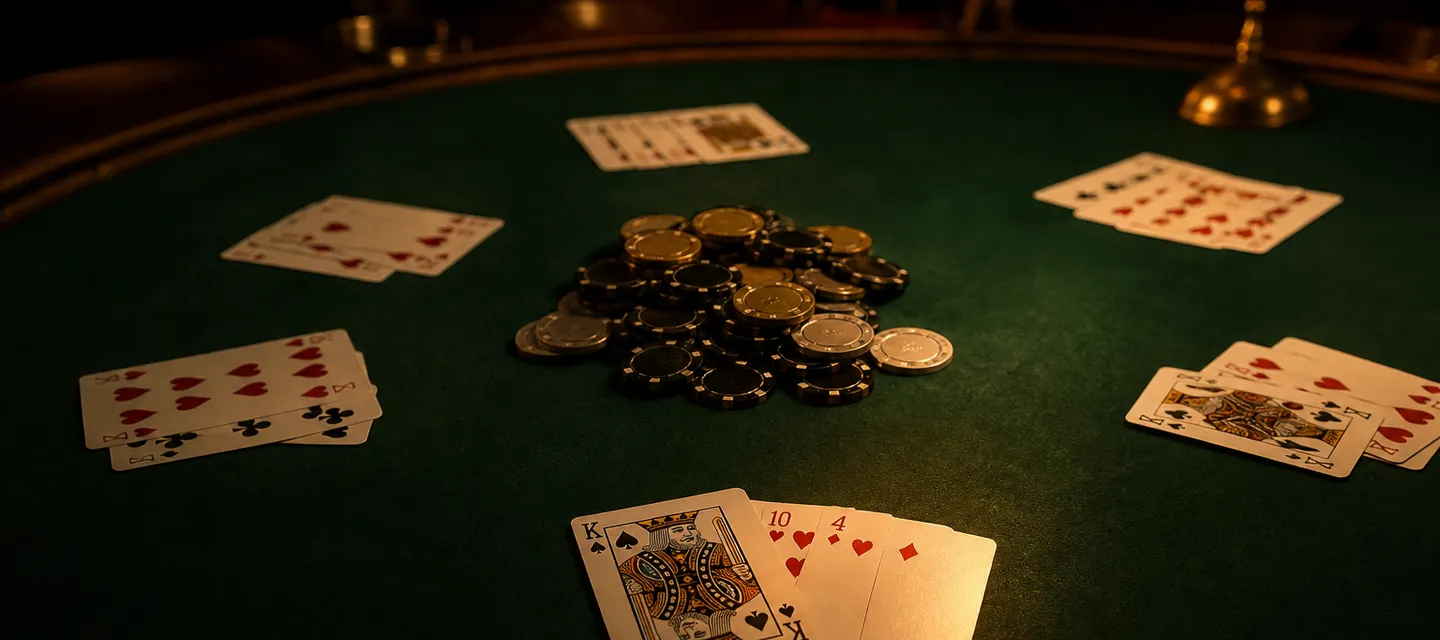
Every round deals a complete showdown face up: a five-card community board, Hand A on the left, Hand B on the right. Your job is the one a dealer does a hundred times a night - call the winner. Three buttons, one answer: Hand A, Split Pot or Hand B. Keyboard players use 1, 2 and 3, with Space dealing the next hand.
The engine settles it with exact math. It evaluates the best five cards from each seven-card hand and compares them with full kicker precision, then names both hands so you can see exactly why the pot went where it went. Get it right and you score 100 points times your current streak - the first correct answer pays 100, the fifth in a row pays 500. Get it wrong and the streak dies on the spot, the correct answer lights up, and the deal moves on without comment. Your best score and best streak are kept in your browser between visits.
One detail worth knowing: about one round in four, the dealer goes hunting for a deliberately awkward board - a split pot, or two hands of the same category separated only by a kicker. Those are the rounds that pay for the whole exercise.
Read both hands, call the winner, get the verdict - then the next board is already waiting.
The traps it deals on purpose
Most showdown mistakes come from a short list of patterns, and this trainer serves all of them. Counterfeiting is the classic: your two pair looks fine until the board pairs a higher rank and your second pair stops mattering. Board-plays-splits are its cousin - when the best five cards are all on the board, both hands split no matter how pretty their hole cards are. Flushes hide inside suited boards, straights hide inside connected ones, and a kicker battle can turn two "identical" pairs into a full pot moving one direction.
The rule that resolves nearly every argument: each player uses the best five of their seven cards, exactly five, and the sixth card never breaks a tie. If both best-fives are identical, it is a split. Players who internalise that sentence stop losing arguments; players who internalise it fast stop losing pots.
Common beginner mistakes
- Reading only the hand that looks strong and skimming the other
- Missing that the board itself plays - five community cards can be both players' best hand
- Kicker blindness on paired boards
- Calling a flush before checking the board for a straight flush
- Racing the clock before the reading is right - speed is the last skill, not the first
What it trains
Hand reading is the floor under every other poker skill. Equity estimates, bluff catching, value betting - all of it assumes you can look at seven cards and know instantly what you hold and what beats it. Most players think they can. A dozen rounds here, with the streak counter keeping score, tends to deliver the news either way. The split button deserves its own respect: new players treat it as the trick option, while regulars know that boards play often enough for chopped pots to be a routine part of the arithmetic, and calling them correctly is the mark of someone who actually reads all seven cards.
Speed matters as much as accuracy. At a real table you read the board while following the betting, and hesitation leaks information. Drilling showdowns until the reading happens on sight frees your attention for the part of the game that actually makes money: the decisions. If the rankings themselves are the weak link, run the Hand Trainer first and come back - this table assumes you know a full house outranks a flush, and the rest of the games floor assumes it harder.
Tips from the rail
- Read the board alone before looking at either hand, and name the best possible five cards it allows - once you know what the nuts would be, both hands grade themselves against it.
- Check the categories top-down: any flush possible, any straight possible, is the board paired - those three questions catch nearly every miss before it happens.
- When both hands make the same category, slow down and compare card by card, because that is precisely the spot the trainer hunts for and precisely the spot real pots get shipped the wrong way.
- Count to exactly five. Two pair on the board plus a pair in the hand feels like a monster until you realise a five-card hand only has room for two of those three pairs.
- Say the full name of each hand before answering - "tens and sixes, king kicker" - since the habit of naming hands precisely is the habit of reading them precisely, and the hand rankings guide gives you the vocabulary.