Poker has its own hall of fame - names that come up again and again in tournament archives, poker media and the stories players tell at the table. Some are historic figures who shaped the modern game; others are professionals still active on today’s high-stakes circuit. The profiles below give each player’s nationality, what they are broadly known for and a link to their Wikipedia article. Further down, a sortable table sets their WSOP bracelets, best-known titles and live tournament earnings side by side, with every figure taken from a named source, and a separate section covers the best British poker players. None of this is a ranking, and none of it is a suggestion to play for money - it is simply context for anyone learning the game on the free practice tables here.
Famous poker players, from the old legends
to the modern professionals
A short, careful guide to some of the most recognisable names in poker - historic champions and current professionals alike - with a link to read the full story of each on Wikipedia.
Poker legends
The historic names who shaped poker’s public image - remembered for early world-championship runs, the televised era, and a lasting influence on how the game is played and watched.
Doyle Brunson
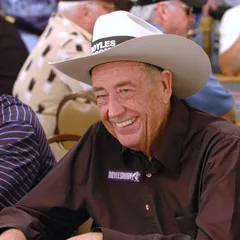
An American professional player and author, regarded as one of the most important figures in the history of modern poker, and closely associated with the World Series of Poker.
Read on WikipediaPhoto: flipchip / LasVegasVegas.com, CC BY-SA 3.0, cropped
Phil Hellmuth
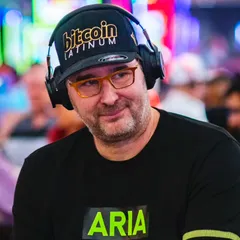
An American professional player widely known for his tournament success and long presence at the biggest stages in the game, including a record number of World Series of Poker bracelets.
Read on WikipediaPhoto: World Poker Tour, CC BY 3.0, cropped
Erik Seidel
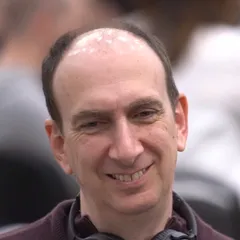
An American professional player known for his consistency and a long career at the highest level, regularly named among the most respected figures in tournament poker.
Read on WikipediaPhoto: World Poker Tour, CC BY 3.0, cropped
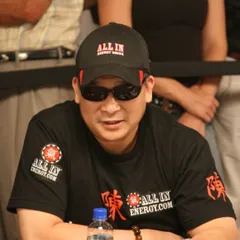
Johnny Chan
A professional player known for his achievements in major tournaments and a lasting place in the history of the World Series of Poker.
Read on WikipediaPhoto: Gene Bromberg, CC BY-SA 2.0, cropped
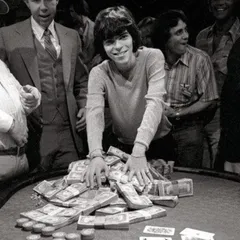
Stu Ungar
An American player remembered as one of the most iconic names in the history of the game, often mentioned in discussions of its most memorable talents.
Read on WikipediaPhoto: Shwobopho, CC BY-SA 4.0, cropped
 AI
AIPoker legends timeline
- 1970The World Series of Poker begins in Las Vegas.
- 1988Johnny Chan takes back-to-back Main Event titles.
- 2003The online era sparks a worldwide poker boom.
Modern professionals
Players prominent on today’s high-stakes and tournament circuit - known for major live events, strong online results and a visible presence in the current game.
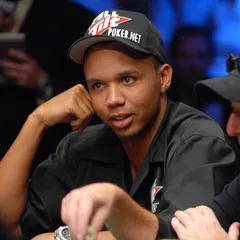
Phil Ivey
An American professional player known for his success in both tournaments and high-stakes cash games, and a familiar name in high-roller events.
Read on WikipediaPhoto: LasVegasVegas.com, CC BY-SA 3.0, cropped
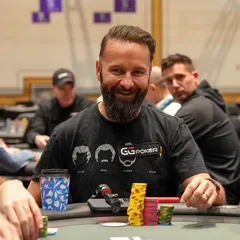
Daniel Negreanu
A Canadian professional player and one of the most recognisable figures in the game, known for a long career and an active presence in poker media and tournaments.
Read on WikipediaPhoto: Captain Q Farf, CC BY-SA 4.0, cropped
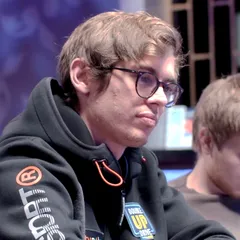
Fedor Holz
A German professional player known for his results in high-roller and high-stakes tournaments, and one of the recognisable names on the modern tournament scene.
Read on WikipediaPhoto: 888poker Spain, CC BY 3.0, cropped
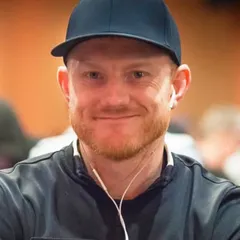
Jason Koon
An American professional player known for his appearances in high-stakes tournaments and a strong presence in the modern high-roller game.
Read on WikipediaPhoto: World Poker Tour, CC BY 3.0, cropped
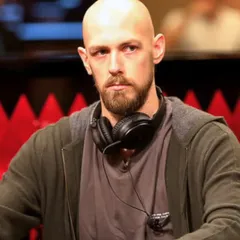
Stephen Chidwick
A British professional player known for a consistent presence in major international tournaments, and frequently mentioned among the leading names on the modern professional scene.
Read on WikipediaPhoto: World Poker Tour, CC BY 3.0, cropped
 AI
AIThe modern era, in brief
- 2003Online play opens the game to a global audience.
- 2011Black Friday reshapes the United States online scene.
- 2020sSolvers and deep study redefine how the game is played.
The best British poker players
Britain has produced a Main Event champion, the first two-time EPT winner and the highest live earner England has ever had. Stephen Chidwick, profiled above, sits second on the all-time live tournament money list with more than $79 million. Back in 1990, the London-based Mansour Matloubi became the first player from outside the United States to win the WSOP Main Event. These are some of the other names UK players know best.
Sam Trickett
- Finished second in the 2012 Big One for One Drop, a $1,000,000 buy-in event, losing heads-up to Antonio Esfandiari and collecting $10,112,001.
- Won the A$100,000 High Roller at the 2011 Aussie Millions.
- Has more than $21 million in live tournament earnings without a WSOP bracelet.
Jake Cody
- Won EPT Deauville in 2010 for €857,000 and the WPT London Main Event later that year.
- Completed poker's Triple Crown on 4 June 2011 by winning the $25,000 Heads-Up Championship at the WSOP for $851,192.
Chris Moorman
- Built his name online as "Moorman1" and passed $15 million in online tournament earnings in 2018.
- Won the WPT LA Poker Classic Main Event in 2014 for $1,015,460.
- Took his first WSOP bracelet in 2017, in the $3,000 No-Limit Hold'em 6-Handed event.
Liv Boeree
- Earned a first-class degree in physics with astrophysics at the University of Manchester.
- Won the EPT Sanremo Main Event in April 2010 for €1,250,000.
- Won a WSOP bracelet in 2017 in the $10,000 Tag Team event, partnered with Igor Kurganov.
Dave "Devilfish" Ulliott
- Won the first series of Late Night Poker, the 1999 television series that was the first poker show to use hole-card cameras.
- Won a WSOP bracelet in 1997 in the $2,000 Pot-Limit Hold'em event, and the 2003 WPT World Poker Open, beating Phil Ivey heads-up.
- Inducted into the Poker Hall of Fame in 2017, two years after his death.
Victoria Coren Mitchell
- Became the first woman to win a European Poker Tour event when she took EPT London in 2006.
- Won EPT Sanremo in April 2014 for €476,100 and became the first player to win two EPT Main Events.
- Also presents the quiz show Only Connect on British television.
Charlie Carrel
- Won the €25,500 High Roller at the 2015 EPT Grand Final for €1,114,000.
- Took the £50,000 eight-max event at the 2019 Triton Super High Roller Series in London for $1,611,620.
Sam Grafton
- Won the first $200,000 Coin Rivet Invitational in 2022, beating Linus Loeliger heads-up for $5,500,000, the largest score of his career.
- Finished second in the €100,000 Super High Roller at EPT Barcelona in 2019.
Famous poker players by the numbers
Every player on this page in one table. Earnings are live tournament cashes only; they leave out cash games, online results and buy-ins, so they measure activity at the top as much as profit. Select a column heading to sort.
| Notable titles | ||||
|---|---|---|---|---|
| Stephen Chidwick | United Kingdom | 2 | Bracelets in 2019 ($25,000 PLO High Roller) and 2024 ($50,000 PLO Championship); most live winnings of any English player | over $79m |
| Jason Koon | United States | 2 | 12 Triton titles; Poker Hall of Fame 2026; 2025 $50,000 High Roller bracelet | $77.0m |
| Daniel Negreanu | Canada | 8 | WSOP Player of the Year 2004 and 2013; two WPT titles; Hall of Fame 2014; eighth bracelet in 2026 | $60.7m |
| Phil Ivey | United States | 11 | Poker Hall of Fame 2017; 11th bracelet in 2024 ($10,000 2-7 Triple Draw) | $56.1m |
| Fedor Holz | Germany | 2 | 2016 $111,111 High Roller for One Drop; runner-up in the 2018 $1,000,000 Big One for One Drop | $50.7m |
| Erik Seidel | United States | 10 | Hall of Fame 2010; 1988 Main Event runner-up; 2011 Aussie Millions A$250,000 Super High Roller | $49.3m |
| Phil Hellmuth | United States | 17 | Record 17 bracelets; 1989 Main Event; 2012 WSOP Europe Main Event; Hall of Fame 2007 | $31.6m |
| Sam Trickett | United Kingdom | 0 | Runner-up in the 2012 Big One for One Drop; 2011 Aussie Millions A$100,000 High Roller | $21.8m |
| Sam Grafton | United Kingdom | 0 | 2022 $200,000 Coin Rivet Invitational ($5.5m) | $15.7m |
| Chris Moorman | United Kingdom | 2 | 2014 WPT LA Poker Classic; 2017 $3,000 NLH 6-Handed bracelet | $11.8m |
| Charlie Carrel | United Kingdom | 0 | 2015 EPT Grand Final €25,500 High Roller | $9.6m |
| Johnny Chan | United States | 10 | Main Event 1987 and 1988; Hall of Fame 2002 | $8.8m |
| Liv Boeree | United Kingdom | 1 | 2010 EPT Sanremo Main Event; 2017 $10,000 Tag Team bracelet | $6.7m |
| Dave Ulliott | United Kingdom | 1 | 1997 $2,000 Pot-Limit Hold'em bracelet; 2003 WPT World Poker Open; Hall of Fame 2017 | $6.2m |
| Doyle Brunson | United States | 10 | Main Event 1976 and 1977; Hall of Fame 1988; author of Super/System | $6.2m |
| Jake Cody | United Kingdom | 1 | Triple Crown: EPT Deauville 2010, WPT London 2010, WSOP 2011 | $5.2m |
| Stu Ungar | United States | 5 | Main Event 1980, 1981 and 1997; Hall of Fame 2001 | $3.7m |
| Victoria Coren Mitchell | United Kingdom | 0 | EPT London 2006 and EPT Sanremo 2014, the first player to win two EPT Main Events | $2.5m |
Sources: live tournament earnings from The Hendon Mob database as shown on each player's PokerNews profile, rounded to the nearest $0.1 million, as of September 2026. WSOP bracelet counts from WSOP.com results and PokerNews; titles and Hall of Fame years from WSOP.com, PokerNews and Wikipedia. Online-only bracelets are included in the count. The full list of world champions is on the WSOP Main Event winners page.
What changed in 2025 and 2026
Michael Mizrachi won the 2025 Main Event and, earlier the same summer, the $50,000 Poker Players Championship for a fourth time; WSOP.com calls him the first player to win both in one year. In 2026 Daniel Negreanu won his eighth bracelet in the $100,000 High Roller Pot-Limit Omaha, Jason Koon became the only player voted into the Poker Hall of Fame that year, and 22-year-old Lucas Jumalon won the Main Event from a field of 9,208.
How poker fame is built
Poker players become widely known for different reasons. Some are remembered for major tournament titles, including world-championship events and long runs on the live circuit. Others are closely linked to cash games, high-stakes tables, or the televised era that introduced poker to a global audience.
Media presence matters too. A player who appears often in broadcasts, interviews or poker documentaries can become far more recognisable than someone with a quieter career. Fame in poker is rarely one thing - it is usually a mix of results, visibility and a long-term influence on how the game is played and watched.
Keep exploring the game
If the famous names brought you here, the next step is the game itself - the hands, the odds and the decisions behind every table.
Common questions
Is this a ranking of the best poker players?
No. It is a list of widely recognised names, not an ordered ranking. Poker has no single agreed measure of "best" - some players are known for tournaments, others for cash games, and others for their influence on the game - so this page simply gathers names that appear often in poker history and media, with a link to read more about each.
Where can I read more about each player?
Every profile links to that player’s Wikipedia article, which is kept up to date by its editors and cites its own sources. The short notes here are deliberately brief and cautious; Wikipedia is the place to go for detailed careers, results and records.
Where do the player photographs come from?
Each photo comes from Wikimedia Commons and is used under its Creative Commons licence, with the photographer and the exact licence credited beneath every picture. Follow a player’s Wikipedia link for the full-size original and its full licence details.
How were the players on this list chosen?
They are widely recognised names that recur across poker history and media, picked to span both eras - a few historic legends and several current professionals - rather than to rank anyone. It is a starting selection, not an exhaustive one, and plenty of other strong players could sit alongside them.
What makes someone a legend rather than a modern professional?
Loosely, the legends are the historic figures who shaped the game in earlier decades, while the modern professionals are prominent on today's high-stakes and tournament circuit. The line is not strict - some careers span both - and each profile links to Wikipedia for the full timeline.
Who has won the most WSOP bracelets?
Phil Hellmuth, with a record 17. One of them is the 1989 Main Event, and his most recent came in 2023. Of the other players on this page, Phil Ivey has 11, and Doyle Brunson, Johnny Chan and Erik Seidel have 10 each.
Which poker players have won the most money in live tournaments?
Of the players on this page, Stephen Chidwick leads with more than $79 million, which put him second on the all-time live money list in 2026, followed by Jason Koon with more than $77 million and Daniel Negreanu with more than $60 million. These are tournament cashes recorded by The Hendon Mob, not profit: they do not subtract buy-ins, and cash-game results are not tracked at all.
Who is the best British poker player?
By live earnings it is Stephen Chidwick, who has won more in live tournaments than any other English player. By titles, the case for Victoria Coren Mitchell rests on being the first two-time EPT Main Event champion, and Mansour Matloubi, based in London, won the WSOP Main Event in 1990. Sam Trickett came closest to the biggest single prize, finishing second in the 2012 Big One for One Drop for more than $10 million.