How the table works
You sit down with 1,000 chips against three house players: Viktor, Ada and Marco. Every hand runs the full Texas Hold'em script. Two hole cards each, a round of betting, then the flop, the turn and the river, with betting after every street and a showdown if more than one player is still standing when the last bet is called. The dealer button moves one seat to the left after every hand, so the blinds come around to everyone in turn.
Your controls sit under the felt: Fold, Check or Call, and Raise. Open the raise panel and you get Min, Pot and All-In presets, plus a stepper for any amount in between. The table handles the fiddly rules correctly - minimum raise sizes, all-ins for less than a full raise, and side pots when players are all-in for different amounts. At showdown the banner names both hands in plain language. "Two Pair - Kings and Nines" leaves no room for argument.
Opponents who lose their last chip leave the table for good. Take every chip on the felt and the game declares the table cleared. Go broke and it tells you how many hands you lasted and the biggest stack you built along the way, which is a politer scoreboard than most card rooms offer. Play Again resets all four stacks to 1,000.
A Hold'em hand, step by step
Four betting rounds, five shared cards, and the best five-card hand at the end takes the pot.
The full rule book - side pots, the minimum raise, what happens when someone is all-in for less - is on the Texas Hold'em rules page, and any spot you want to check afterwards runs in the odds calculator.
Blinds, stacks and the button
The blinds stay fixed at 10 and 20, so your 1,000-chip stack is worth 50 big blinds - a normal, playable depth where raises, calls and folds all still make sense. The blinds exist to force action: two players pay before seeing a card, everyone else gets to decide whether the pot is worth fighting for. A standard opening raise to three big blinds costs you 60 chips here, six percent of your stack, which is cheap enough to try things and expensive enough to punish habit.
The button is the best seat in the game because it acts last on every street after the flop. When the table thins to two players, the button posts the small blind, acts first before the flop and last after it - the same rule every live card room uses, and one that surprises people the first time they meet it.
What it trains
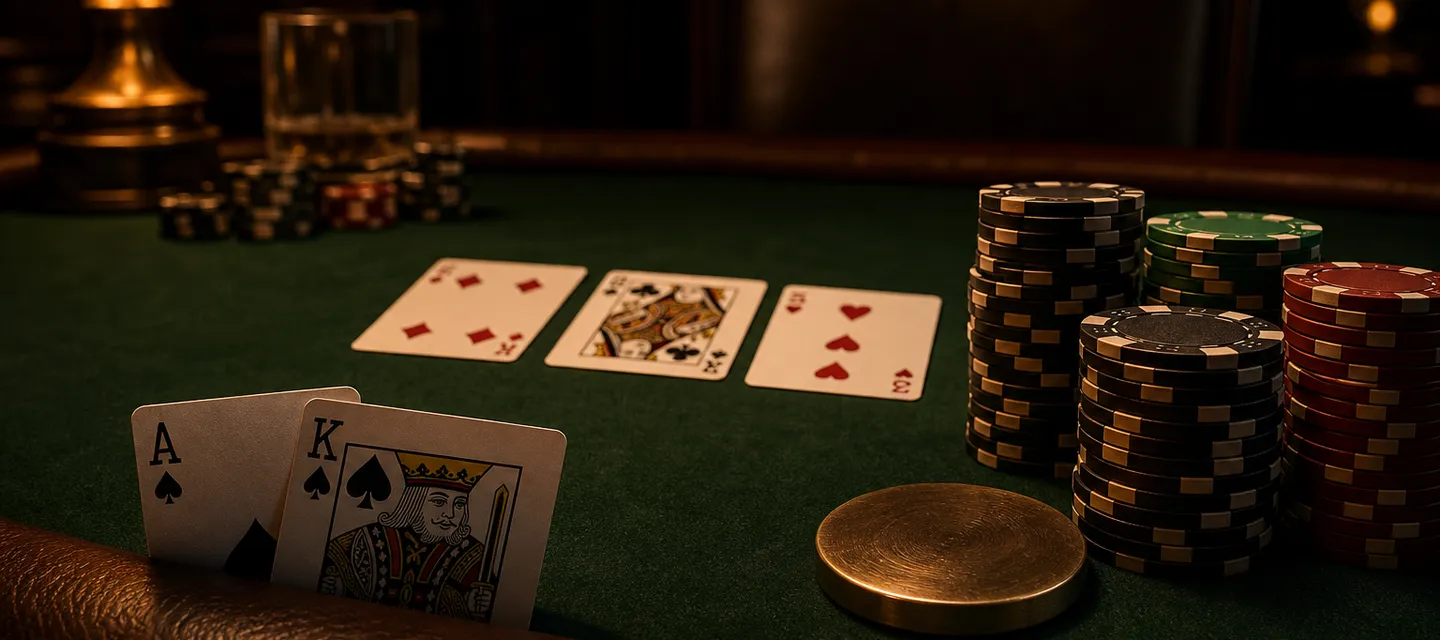
This is the whole game in one place, which makes it the right table for putting the pieces together. The drills on our games floor isolate one skill at a time; this one makes you use all of them in sequence, under pressure, with chips attached. You pick starting hands, you size bets, you read board texture, and you find out at showdown whether your read was worth what you paid for it.
The house players are honest opponents rather than pushovers. They rate their starting hands the way a points system does, so they raise big pairs, call with playable hands and dump junk. That matters for your practice: bluffing a calling station teaches you nothing, and neither does value-betting a player who folds everything. Against opponents with actual standards, your starting hand choices start showing up in your results within a session.
Quick beginner strategy
- Raise your strong hands - limping in teaches you nothing and builds no pot when you are ahead
- Fold weak offsuit junk without regret; most hands are folds and that is normal
- Respect position - the later you act, the more you know, so play more hands from the button and fewer up front
- Do not chase every draw - a draw is only worth what the pot pays for it
- Stop calling "to see one more card" - if the price is wrong on the turn, it is still wrong on the river
Best starting hands in Texas Hold'em
The deck deals 169 distinct starting hands and most of them are folds. A short list carries almost all of the value - raise these, and treat everything outside them with suspicion until you know why you are playing it.
| Tier | Hands | How to treat them |
|---|---|---|
| Premium | AA, KK, QQ, AK | Raise from any seat, reraise when opened |
| Strong | JJ, TT, AQ, AJs, KQs | Raise; proceed carefully into heavy resistance |
| Playable | 99-77, suited connectors, KQ | Better in late position, happiest in cheap pots |
| Fold | Weak offsuit, disconnected low cards | Muck them - curiosity is the most expensive habit in poker |
The full tier-by-tier breakdown, with the real frequencies attached, lives in our starting hands guide.
Why position matters at four-handed
Acting later means deciding with more information: you have seen who checked, who bet and how much before your chips move. At a four-handed table this matters even more than at a full ring - the blinds come around fast, ranges are wider, and the button arrives every fourth hand. Play your widest from the button, your tightest first to act, and notice how different the same cards feel from the two seats. The position guide turns that feeling into a plan.
Common beginner mistakes
- Playing far too many hands because folding feels like losing
- Calling out of position with hands that only look pretty
- Overvaluing one pair on a coordinated board
- Chasing weak draws with no idea what the pot is paying
- Ignoring stack sizes until all the chips are suddenly in
- Forgetting the ladder - the hand rankings settle every showdown
Tips from the rail
- Play tighter when you act early and looser on the button, because acting last means you see three decisions before making yours, and information is the only free thing at a poker table.
- When a house player raises before the flop, give them credit for a real hand - they score their cards before acting, so a weak ace that calls their raise is usually dominated and drawing thin.
- Size your bets to the pot, not to your mood; a pot-size bet charges draws properly, while a minimum bet hands every flush draw the right pot odds to chase you down.
- Watch showdowns you are not part of. The banner names both hands every time, and seeing what a house player raised with is free scouting for the next hundred hands.
- Fold more rivers. By the last card the pot is big and your curiosity is expensive, and calling "just to see" is how 50 big blinds become 20.
If full hands feel like too many decisions at once, strip it down: All-in or Fold deals the same cards and asks only the first question. Get that one right and come back.